

By using our website, you agree to the use of cookies as described in our Cookie Policy
Blog
Wood Rot Repair for Riverside Windows and Doors
Riverside homeowners know the drill. The weather shifts. Moisture creeps in. And before long, your window sills and door frames aren't just weathered — they're compromised. Wood rot doesn't announce itself with fanfare. It shows up quietly, weakens the structure silently, and costs you real money if you wait too long to address it.
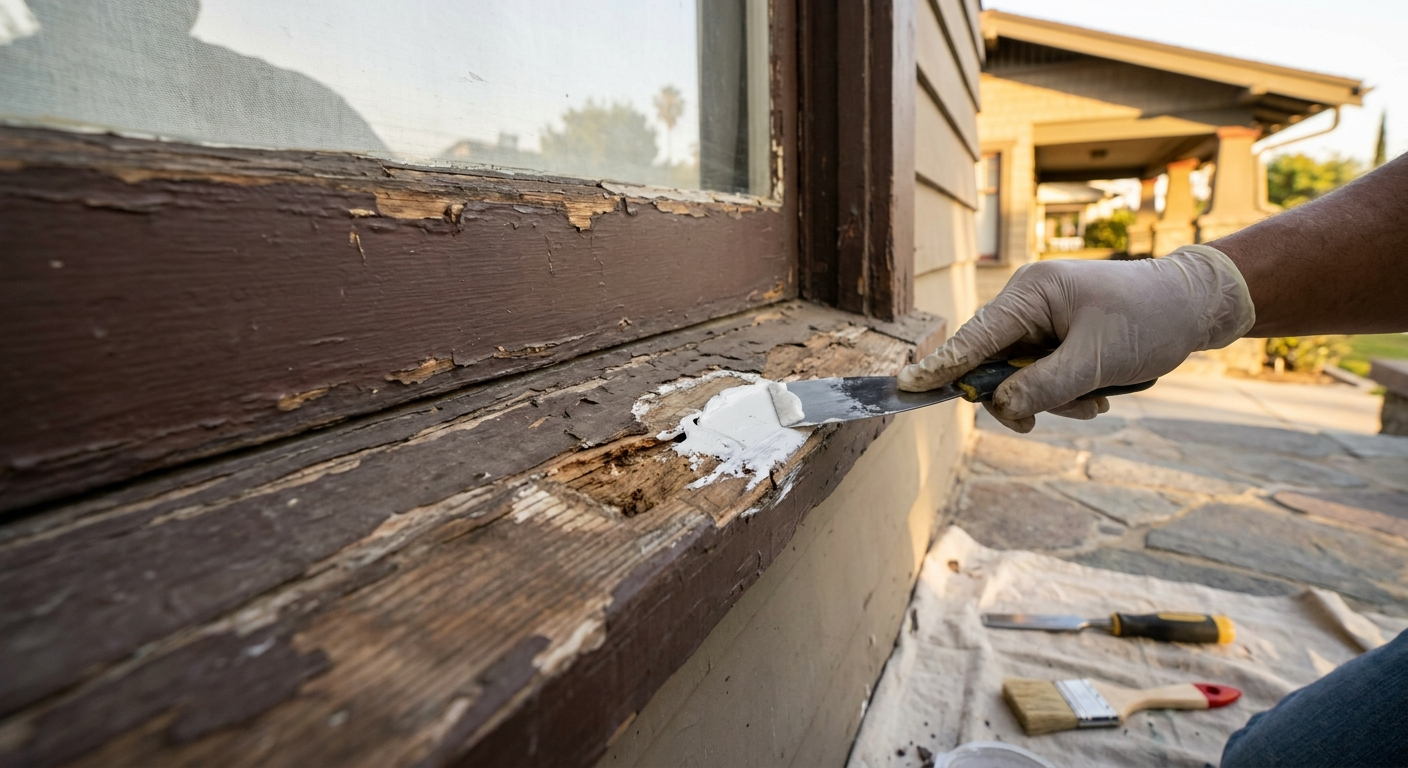
We're not talking about cosmetic wear. This is decay that eats through wood fiber, turns solid frames spongy, and opens the door — literally — to air leaks, pest entry, and energy loss. The good news? Catching it early and handling it right can save you from tearing out entire frames. The bad news? Most people don't notice until the damage is done.
Why Riverside Frames Take a Beating
Riverside's climate isn't harsh by most standards, but it's sneaky. You get enough rain to soak unprotected wood, enough humidity to keep it damp, and enough sun to crack paint and sealant wide open. Once water finds its way into bare wood, fungi move in. They thrive in moisture, break down cellulose, and leave behind softened, discolored wreckage.
Windows and doors sit at the front line. They're exposed to weather on the outside and temperature swings on the inside. If the finish is compromised or caulking has failed, moisture doesn't just sit on the surface — it soaks in. And once it does, the clock starts ticking.
Spotting the Damage Before It Spreads
You don't need a contractor to tell you something's wrong. A quick inspection with your eyes and hands will reveal most problems. Press on the wood around your frames. If it gives, you've got rot. If paint is bubbling or peeling in sheets, moisture is trapped underneath. Dark streaks, musty smells, or visible mold? Same story.
Here's what we look for during an inspection:
- Soft spots that compress under light pressure
- Discoloration ranging from dark brown to yellow-gray
- Cracks or gaps where wood has pulled away from the frame
- Paint that flakes off in chunks rather than adhering to the surface
- Mold growth or a damp, earthy odor near the affected area
How We Fix It Without Ripping Everything Out
Not every case of rot requires a full replacement. If the damage is localized and the surrounding structure is sound, a proper repair can restore integrity and buy you years of service. The key is removing every bit of compromised wood and rebuilding with materials that won't fail under the same conditions.
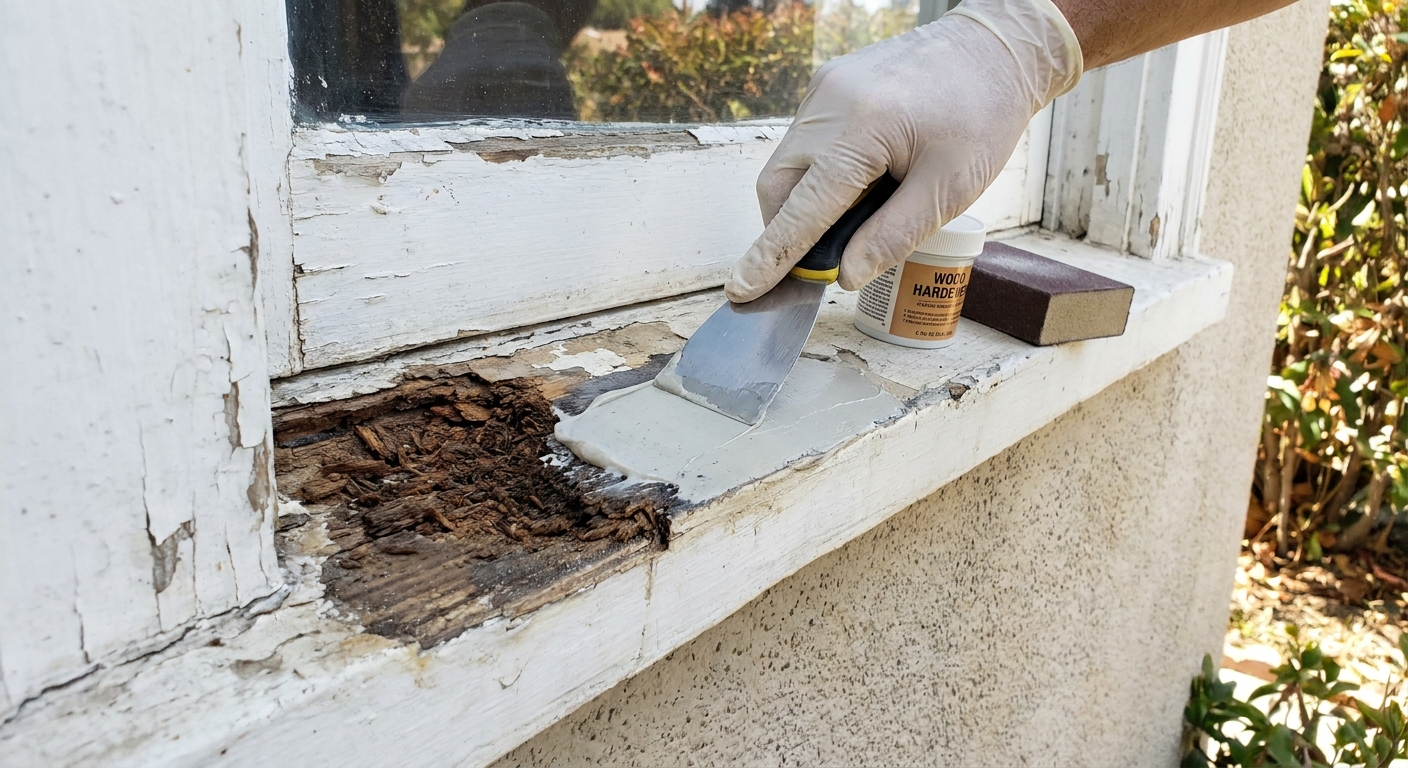
We start by cutting away the rot — not just the soft parts, but anything that shows discoloration or gives under pressure. Then we dry the area completely. Skipping this step is how people end up doing the same repair twice. Once it's dry, we apply a wood hardener to stabilize the remaining fibers, then fill the void with epoxy-based filler that won't shrink, crack, or absorb water.
Materials That Actually Hold Up
Not all fillers are created equal. The cheap stuff shrinks as it cures and cracks within a season. We use two-part epoxy systems designed for exterior use — they bond to wood, resist moisture, and can be shaped, sanded, and painted just like the original material.
Here's what goes into a solid repair:
- Wood hardener to penetrate and reinforce weakened fibers
- High-density epoxy filler that cures hard and stays put
- Exterior-grade primer that seals the repair from moisture intrusion
- Top-coat paint or stain formulated to flex with temperature changes
- Flexible caulking to seal joints and prevent future water entry
Stopping It Before It Starts
Repair is one thing. Prevention is smarter. Most wood rot happens because water had an open invitation. Caulking failed. Paint cracked. Gutters overflowed and dumped water right onto the trim. Fix those weak points and you won't be scraping out rot every few years.
We tell clients to check their frames twice a year — spring and fall. Look for peeling paint, cracked caulk, or gaps where water can sneak in. Reseal anything questionable. Keep gutters clear. And if you see bare wood, don't wait for the next rain to remind you why that's a problem.
When DIY Turns Into a Bigger Problem
Homeowners with the right tools and a steady hand can handle small repairs. But if the rot extends into structural members, affects multiple areas, or you're not sure how deep it goes, calling in a pro isn't overkill — it's smart risk management.
Here's when we recommend professional help:
- Rot has spread into the framing or wall structure behind the trim
- Multiple windows or doors show signs of decay at once
- Previous repairs failed and the problem returned
- You're dealing with historic or custom millwork that can't be easily replaced
- The damage includes warping, sagging, or visible gaps that affect function
What Happens If You Wait
Ignoring wood rot doesn't make it go away. It spreads. What starts as a thumbnail-sized soft spot becomes a section of frame that crumbles under your finger. Eventually, the rot reaches structural wood, and now you're not repairing trim — you're rebuilding walls.
We've seen cases where homeowners waited so long that the window frame lost its ability to hold the glass in place. Others where doors wouldn't latch because the strike plate was mounted to wood that had turned to mush. At that point, the cost jumps from a few hundred dollars to several thousand, and the work takes days instead of hours.
How Long a Good Repair Lasts
Done right, a wood rot repair can outlast the surrounding original material. Epoxy doesn't rot. It doesn't absorb water. And it doesn't shrink or crack under UV exposure the way some wood does. We've inspected repairs we made a decade ago that still look and perform like new.
The wildcard is maintenance. If you let the finish fail again, moisture will find a way in — maybe through a different spot this time, but the result will be the same. Keep the paint fresh, the caulk intact, and the drainage working, and you won't be calling us back.
Why Riverside Pros Know the Local Risks
Not every market sees the same patterns. Riverside's combination of dry heat and seasonal moisture creates specific vulnerabilities. Contractors who work here regularly know which exposures fail first, which products hold up in local conditions, and which shortcuts lead to callbacks.
Here's what local experience gets you:
- Knowledge of which wood species and finishes perform best in Riverside's climate
- Familiarity with common construction details in area homes
- Access to suppliers who stock materials rated for exterior use in similar conditions
- Understanding of how local pests and fungi interact with building materials
- Faster turnaround because they're not learning on your dime
The Real Cost of Putting It Off
A small repair costs a few hundred dollars and takes an afternoon. A full frame replacement can run several thousand and require permits, drywall work, and repainting. The difference comes down to timing. Catch it early, and you're looking at a straightforward fix. Wait until the frame is sagging, and you're into structural territory.
We've walked properties where every window had rot because the owner kept saying they'd get to it next season. By the time they called, half the frames needed replacing and the rest were borderline. The total bill could have bought new windows outright — and the homeowner still ended up with patched-together originals instead of upgrades.
Moving Forward Without the Guesswork
Wood rot repair isn't glamorous, but it's one of those tasks that separates homeowners who maintain value from those who watch it slip away. Riverside's climate won't change. Moisture will keep testing your defenses. The question is whether you catch problems early or let them compound until the fix becomes a project.
We work with property owners who want their homes to last — not just look good for the next buyer. That means addressing rot when it's small, using materials that won't fail under the same conditions, and staying ahead of maintenance instead of playing catch-up. Before tackling any exterior painting projects in Riverside, it's critical to ensure all underlying wood is sound. If your frames are showing signs of wear, working with professional painters for historic homes can ensure proper prep and repair. Choosing the right paint for exterior surfaces will also extend the life of your repair. For homes built before 1978, understanding where to look for lead paint is essential before starting any work, and knowing the safe methods to remove lead paint protects both workers and residents. Don't wait for the wood to turn soft. Get it handled now, while the solution is still straightforward.
Let’s Protect Your Riverside Home Together
We know how important it is to keep your home safe, comfortable, and looking its best. If you’ve spotted signs of wood rot or just want peace of mind before the next rainy season, let’s take care of it before it becomes a bigger issue. Give us a call at 951-785-6765 to talk through your concerns, or schedule an appointment and we’ll help you safeguard your windows and doors for years to come.
‹ Back
Recent Posts
-
Wood Rot Repair for Riverside Windows and Doors
October 29, 2026
-
Are Your Riverside Tenant Improvements Ready for Painting?
October 15, 2026
-
-
Is Your Historic Home in Riverside Due for a New Paint Job?
September 17, 2026
-

Can Exterior Painting in Riverside Help Protect Stucco Surfaces?
September 3, 2026